
Kitchen Sink Size Guide: How to Measure Your Cabinet, Worktop & Existing Sink
Posted by Sinks on 23rd Oct 2026
A kitchen sink is more than just a place to wash dishes. It is a daily essential that needs to fit your space perfectly. Before you fall in love with a stylish design, make sure you know which kitchen sink sizes UK homes can accommodate. From cabinet width and worktop space to bowl depth and cut-out measurements, getting the dimensions right can save you from costly fitting issues and help you find a sink that combines style, practicality and a perfect fit for your kitchen.
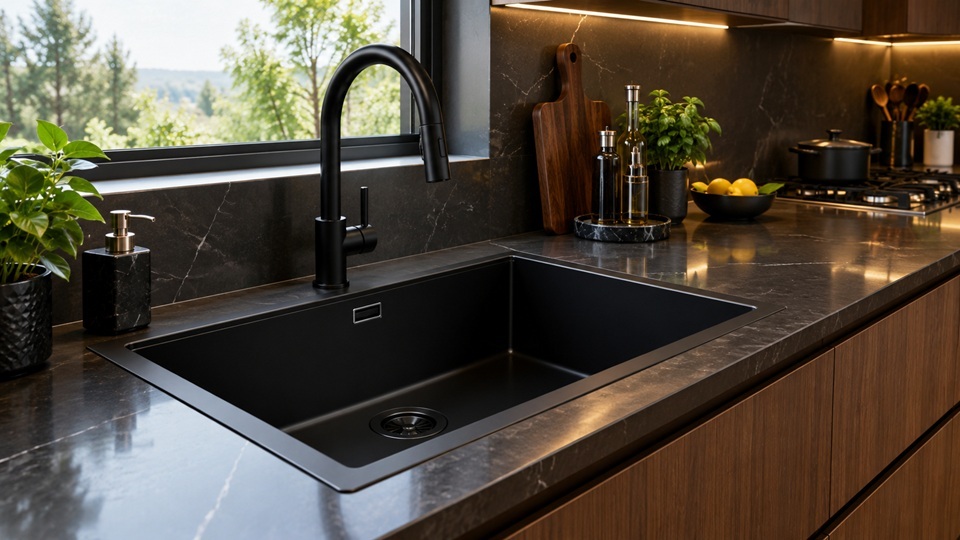
What Are the Standard Kitchen Sink Sizes in the UK?
Kitchen sinks come in various widths, depths and bowl configurations. The right size depends on your cabinet dimensions, available worktop space and everyday needs. There is no single standard size that fits every UK kitchen.
| Sink type | Typical overall width | Best suited for |
| Compact single bowl | 400-500mm | Small kitchens and flats |
| Standard single bowl | 500-600mm | Regular kitchen use |
| 1.5 bowl sink | 600-900mm | Flexible washing and rinsing |
| Double bowl sink | 800-1000mm+ | Busy family kitchens |
| Sink with drainer | 800-1000mm+ | Additional drying space |
Note: These are indicative ranges and hence not guaranteed fitting sizes. Always check the manufacturer's product dimensions and minimum cabinet width before buying.
Step 1: Measure Your Kitchen Sink Cabinet
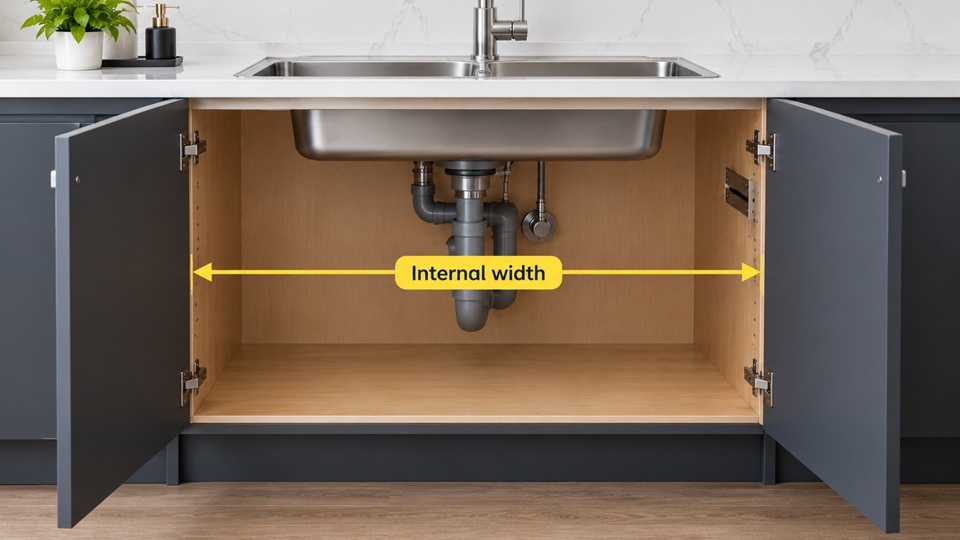
Your sink base cabinet determines which sink models you can install. Start by opening the cupboard beneath your existing sink and measuring the available internal width from one side panel to the other. Also check for cabinet frames, rails, hinges, waste pipes and other fittings that could restrict the available space.
As a general guide, a 600mm cabinet may accommodate a suitable single bowl or 1.5bowl sink and wider cabinets can offer more larger options. However, always check the sink's minimum cabinet size in the product specifications rather than completely relying on the external measurement of the cabinets.
Step 2: Measure Your Worktop Space
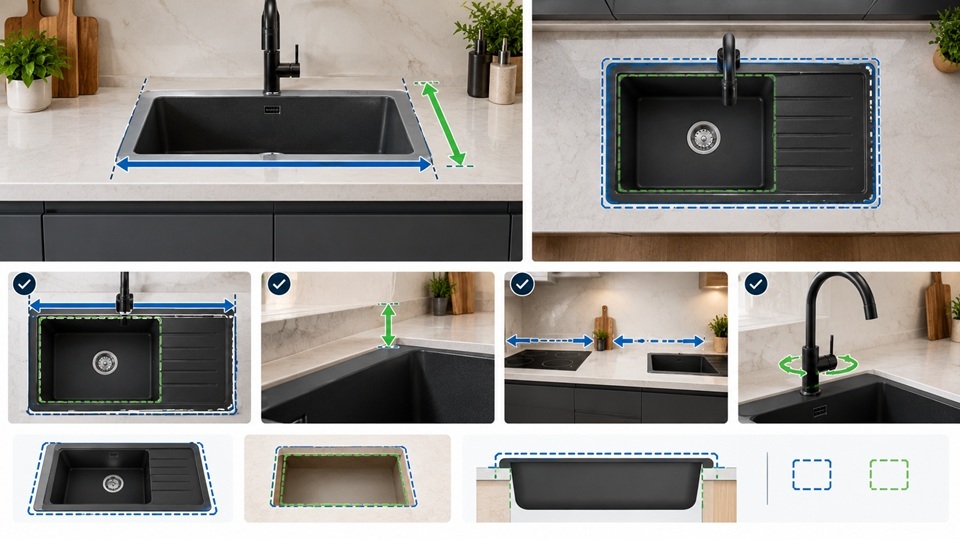
Next, measure the worktop from front to back and check the available width around the proposed sink position. Consider the following before selecting your new sink:
- Overall sink width: Include the bowl, rim and drainer, if fitted.
- Worktop depth: Make sure the sink fits comfortably between the front edge and the splashback.
- Nearby fixtures: Allow space around walls, hobs, corners and adjacent appliances.
- Tap clearance: Check that the tap can be fitted and operated comfortably.
Remember that the overall sink dimensions and the worktop cut-out dimensions are different. An inset sink usually has a rim that rests on the worktop, so its cut-out is smaller than its overall footprint.
Step 3: Measure Your Existing Kitchen Sink
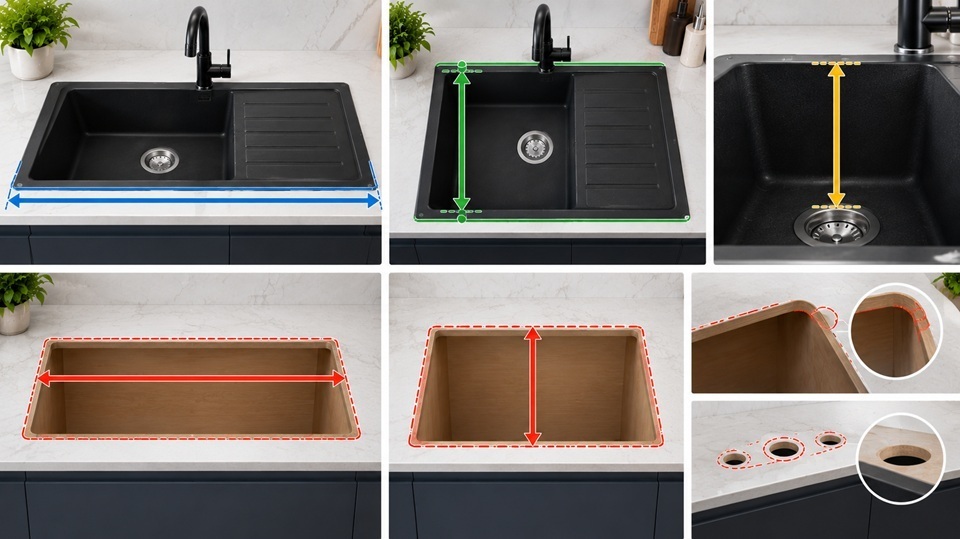
If you are replacing a kitchen sink, measuring the existing model can help you find a suitable replacement. Record these three measurements:
- Length: Measure the sink from left to right, including the drainer where applicable.
- Width: Measure from the front edge of the sink to the back edge.
- Depth: Measure vertically from the top edge of the bowl to its lowest point.
If you are keeping the existing worktop, also measure the current cut-out where accessible. Check its shape, corner radius and tap hole position. A replacement sink may have similar overall dimensions but require a different cut-out. If the new sink is smaller or has a different shape, worktop modifications may be necessary.
Step 4: Check the Sink Type and Installation Requirements
Different kitchen sink styles have different fitting requirements.
| Sink style | What to check |
| Inset sink | Overall dimensions, cut-out size and rim coverage |
| Undermount sink | Bowl dimensions, precise cut-out and worktop suitability |
| Belfast or butler sink | Cabinet support, exposed front and installation depth |
| Flush-fit sink | Exact cut-out dimensions and installation instructions |
Undermount sinks generally suit solid surface worktops, such as stone or quartz. Belfast sinks may require additional cabinet preparation because of their weight and exposed front.
Step 5: Check Bowl Depth and Under Sink Clearance
Sink bowl depth affects usability and the space available underneath your countertop. A deeper bowl can accommodate larger pans, but it may have less room for waste fittings, pipework, waste bins and storage. Many kitchen sinks have bowl depths around 180-220mm, although dimensions vary by model.
Before buying, check the waste outlet position, plumbing clearance and any under sink accessories. If you are also purchasing a kitchen tap, confirm the tap hole arrangement and compatibility.
Frequently Asked Questions
Q. What size kitchen sink can fit a 600mm cabinet?
A: A suitable single bowl or 1.5bowl sink may fit a 600mm cabinet. Check the minimum cabinet width recommended by the manufacturer and the sink's actual dimensions before ordering.
Q. How do I measure a kitchen sink for replacement?
A: Measure the existing sink's length, width and bowl depth. If you are retaining the worktop, check the cut out dimensions too, along with cabinet clearance and tap hole positions.
Q. What is the most common kitchen sink size in the UK?
A: There is no universal standard. Compact single bowls, larger single bowls and sinks with drainers are all popular options. Your available cabinet space should guide your choice.
Q. Can I fit a bigger sink into my existing worktop?
A: Possibly, as long as the cabinet can accommodate the bowl and the worktop has enough space for the new dimensions. Enlarging an existing cut out may be possible, depending on the worktop material and layout.
Q. How to Find the Right Kitchen Sink for My Space?
A: Getting the measurements right makes choosing a new sink much easier. Check your cabinet width, worktop space, existing cut-out and bowl depth before comparing styles and materials.
Explore our range of kitchen sinks by size, bowl configuration and installation type to find an option that suits your kitchen, your budget and your regular needs.